



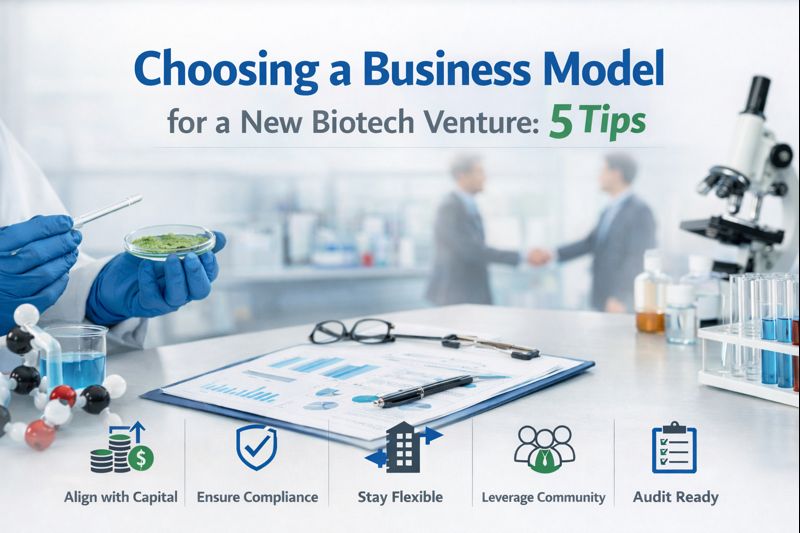
When launching a biotech venture, selecting the right business model is as important to success as the foundations of the science itself. Whichever model you choose will directly shape how you fund research, manage resources, and, importantly, scale upwards. This means that it pays, in a very real sense of the word, to think it through carefully.
Below are a few practical tips to guide this critical business decision, especially if you are considering a co working lab space or incubator-based path:
1) Align Your Model with Capital Availability
Biotech ventures often require substantial upfront capital investment. Necessities like lab equipment and building compliance-grade facilities are all highly expensive. Coupled with the fact that operations can go on for years before any progress or patentable IP assets are developed, you can quickly drain resources well before you show any returns.
Using the right co-working lab setup can significantly reduce your capital and operational burdens. You will enjoy access to BSL-2-certified facilities and access to shared equipment for a fraction of what it would cost to build and maintain your own lab. This added flexibility lets you direct limited funds to core R&D, extend your financial runway, and pivot more easily if priorities shift.
2) Factor in Infrastructure and Compliance Requirements
Biotech research often involves hazardous materials, the handling of which demands strict regulatory compliance. However, setting up a compliant lab, especially at the BSL-2 level, is complex and costly. If regulation, safety and infrastructure are not your core strengths, opting for an incubator or shared-lab model can ease the burden.
A certified coworking laboratory should already meet regulatory safety standards and be equipped with such essentials as HEPA-filtered ventilation, proper hazardous-waste disposal systems, and legally-compliant maintenance schedules. This keeps you from having to build this infrastructure from scratch and lets you focus on your startup’s innovation.
3) Build for Flexibility
As a founder, you may have a very specific vision about where you want to take your vision and your technology. However, the underlying realities of early-stage biotech ventures mean they often evolve quickly. For example, a project may start small but require massive scaling once promising data arrives. Being stuck with a rigid, self-owned lab may hinder agility if you need to pivot direction, scale up, or change focus. Choosing a flexible model that allows for renting benches or desks in a co-working lab, or combining lab space with office suites, may give you room to grow or scale down as needed. This added adaptability helps avoid over-commitment and makes it simpler to respond to changing scientific needs without being tied into internal processes or long-term fixed costs.
4) Leverage Your Community
If you’re serious about biotech, you know very well that it does not exist in a vacuum. Success in this field is highly dependent on access to collaborations and shared knowledge. In places like Singapore, the biotech community is also heavily connected with the academe, public sector, and private service providers. Your business model should, therefore, consider incubators or similar options that provide you with critical contact with vital members of the wider biotechnology community.
These environments tend to bring together many startups, CROs, service providers, and sometimes larger firms. You simply will not enjoy these connections at the same scale if you depend on a self-owned lab.
5) Choose a Structure that Supports Audit Readiness
When structuring your venture, legal form and regulatory compliance matter, especially if you plan to attract investors, scale, or commercialise. In Singapore, a common approach is incorporation as a Private Limited Company (Pte Ltd), which supports 100% foreign ownership, offers limited liability, and aligns well with fundraising and expansion plans.
In any case, biotech is an area which presents significant regulatory hurdles, so you will want to engage with legal experts who understand your industry. Shared biolabs can offer such connections, helping you secure the compliance you need to avoid legal landmines and earn the credibility that draws more investment.
Singapore Offers a Unique Edge for Biotech Builders
Given the massive capital and regulatory challenges faced by biotech startups, the business model that is chosen at launch can matter a great deal. Singapore’s biotech scene still has these challenges, but, unlike most other regional biotech industries, it offers ample resources for navigating them effectively. Basing your venture in Singapore means your startup enjoys government support, a wonderful community of talented scientists and open-minded investors, and leading-edge laboratory infrastructure that you could rent. Even if your business plan is the rare one that specifically demands a self-owned lab, access to shared-lab or co-working models can be highly beneficial, not just for resource-strapped startups but also for more established biotechs that have to better control their expenses. In any case, quality shared facilities give your biotech venture the bandwidth it needs to solve complex technical and scientific challenges.